
Why Do Some People Say It Works and Others Say It Doesn’t?
Why does bone conduction work for some people and not others? Usually it comes down to fit, expectations, and setting — here is a 3-step check.

It started with something small.
Linda noticed her father didn’t laugh at her jokes anymore. Not because they weren’t funny—but because he didn’t always hear them.
At family dinners, he would nod along, smiling politely. The television volume crept higher each week. Phone calls became shorter. Eventually, silence replaced conversation.
This isn’t unusual.
According to the World Health Organization, over 1.5 billion people worldwide experience some degree of hearing loss, and nearly 430 million require rehabilitation. Hearing loss isn’t just about sound—it’s about connection, confidence, and quality of life.
Hearing loss often arrives quietly.
Many people don’t realize it at first. They simply adapt—asking others to repeat, avoiding noisy environments, or withdrawing from conversations altogether.
Research from the National Institute on Deafness and Other Communication Disorders shows that untreated hearing loss can lead to:
In fact, a landmark study published in The Lancet identified hearing loss as one of the largest modifiable risk factors for dementia.
But behind these statistics are real moments—missed laughter, unfinished conversations, and loved ones slowly drifting apart.
One afternoon, Linda brought her father to a hearing specialist.
He resisted at first.
“I’m fine,” he said. “Everyone mumbles these days.”
But the test told a different story.
Like millions of others, he had age-related hearing loss, a common condition where the inner ear gradually loses sensitivity to sound.
The good news?
It’s manageable.
Today’s bone conduction hearing aids are not what they used to be.
Gone are the bulky, whistling devices of the past. Modern solutions—like those developed by brands such as Bluedeer Bone Conduction Hearing Aids—focus on comfort, clarity, and simplicity.
Key advancements include:
Studies from the Hearing Health Foundation show that using bone conduction hearing aids can significantly improve communication, emotional well-being, and overall quality of life.
A week after getting his hearing aids, Linda’s father called her.
“Did you hear that?” he asked.
“Hear what?”
“The birds,” he said softly. “I didn’t realize how much I missed them.”
That weekend, at dinner, something changed.
He laughed again—at the right moments this time.
He joined conversations. He interrupted. He told stories.
He was back.
Many people wait 7–10 years before seeking help for hearing loss. But early intervention makes a difference.
According to the Mayo Clinic, addressing hearing loss early can:
Hearing isn’t just a sense—it’s how we stay connected to the people we love.
If you or someone you love has been:
…it might be time to listen more closely—not just to sound, but to what’s missing.
At Bluedeer Hearing Aids, we believe that hearing clearly means living fully.
It’s not just about technology.
It’s about helping you reconnect—with your family, your world, and yourself.
Because the most important sounds in life aren’t the loudest ones.
They’re the ones we never want to miss.
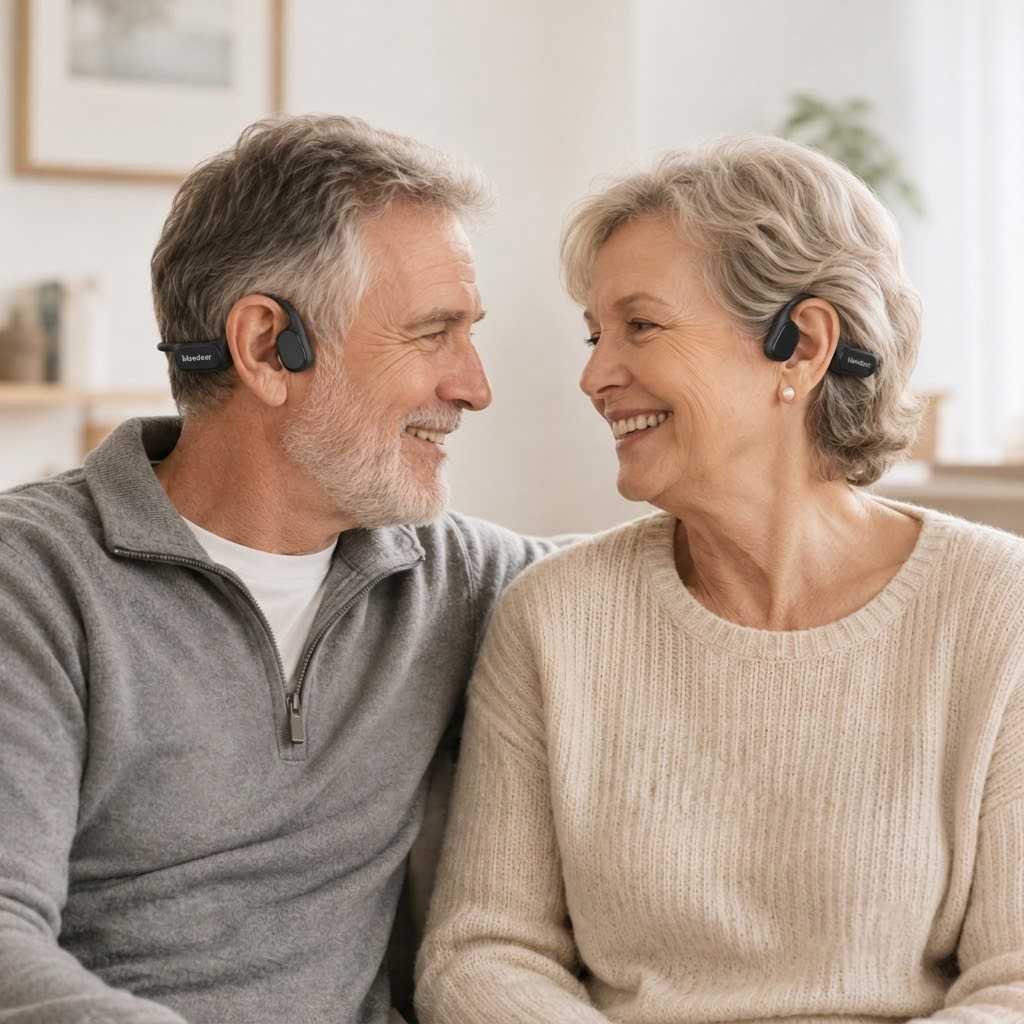
F2H Bone Conduction Sound Amplifier helps you hear conversations clearly while staying comfortable, aware, and connected to the world around you.
Why does bone conduction work for some people and not others? Usually it comes down to fit, expectations, and setting — here is a 3-step check.
Why must bone conduction sit against your ear? Because it sends sound through bone, not air — and a gap breaks the signal. Here’s the simple test.
Hearing aids whistling? Here’s what causes hearing aid feedback — from a loose fit to earwax buildup — and practical fixes that may quiet it down.
Learn how to clean and maintain your hearing aids with this complete guide — a 5-minute daily routine, a weekly deep clean, and care tips for bone conduction and rechargeable models.