




Why Do Some People Say It Works and Others Say It Doesn’t?
Why does bone conduction work for some people and not others? Usually it comes down to fit, expectations, and setting — here is a 3-step check.

BlueDeer Hearing Insights
Family gatherings are supposed to feel joyful—filled with warmth, laughter, and conversation. Yet for millions of people with hearing loss, these events often bring something unexpected:
Stress. Fatigue. Isolation.
Even in a room full of people they love.
This is the hidden emotional burden many never talk about.
To illustrate this, let’s start with a simple story.
Emma is 58, a warm and sociable mother who loves her big family.
But during last year’s holiday dinner, she found herself quietly nodding along as conversations bounced around the room. She could hear voices, but not words.
She laughed when everyone else laughed.
She pretended to follow the conversation.
She smiled even when she didn’t understand the joke.
By the end of the night, she felt exhausted—not from socializing, but from trying to keep up.
When she later tried her first pair of BlueDeer hearing aids, she said something powerful:
“I didn’t realize how lonely it had become until I heard everything again.”
Emma’s experience is shared by millions.

Family gatherings are one of the most challenging environments for people with hearing loss because they combine:
This creates a complex “auditory scene” that the brain must decode.
ASHA explains that speech-in-noise difficulty is one of the earliest warning signs of hearing loss:
https://www.asha.org/public/hearing/speech-in-noise/
For people like Emma, these environments quickly become overwhelming.

People often think hearing loss is about loudness, but in noisy rooms, it’s about clarity.
According to the National Institute on Deafness (NIDCD), the brain must “reconstruct” missing parts of speech when hearing declines—requiring significant mental effort:
https://www.nidcd.nih.gov/health/how-do-we-hear
This leads to:
This is why many people become quieter as the evening goes on—they’re not bored or antisocial.
They’re exhausted.
Family gatherings highlight a painful reality:
It’s possible to feel lonely in a room full of people you love.
Harvard Health notes that hearing loss significantly increases the risk of social withdrawal because conversations become stressful instead of enjoyable:
https://www.health.harvard.edu/diseases-and-conditions/the-hidden-disability-of-hearing-loss
Common emotional responses include:
This emotional weight often becomes heavier than the hearing loss itself.

Most people with hearing loss don’t want to:
So instead, they stay quiet.
Johns Hopkins research shows that untreated hearing loss increases cognitive strain and reduces social engagement:
https://www.hopkinsmedicine.org/health/conditions-and-diseases/hearing-loss
This is why gatherings can shift from joyful to overwhelming.
This is exactly where advanced hearing technology makes the biggest difference.
Modern devices—especially RIC-style designs—don’t simply amplify sound.
They organize it, helping the brain pick out what matters.
The Mayo Clinic describes today’s hearing aids as “speech clarity enhancers,” not volume boosters:
https://www.mayoclinic.org/tests-procedures/hearing-aids/about/pac-20385044
✔ Directional microphones that focus on the voice in front of you
✔ Intelligent noise reduction to soften background clutter
✔ Speech enhancement algorithms that boost voice frequencies
✔ Adaptive processing that responds instantly to changing environments
✔ Feedback control so laughter, clapping, and sudden loud sounds stay comfortable
These tools help users:
For Emma, it meant hearing her granddaughter’s small voice clearly for the first time in years.
When listening becomes effortless again:
The World Health Organization (WHO) emphasizes that communication is central to emotional well-being and healthy relationships:
https://www.who.int/news-room/fact-sheets/detail/deafness-and-hearing-loss
With the right support—like hearing technology designed for real-life environments—family gatherings become joyful again, not stressful.
If you struggle during family gatherings, it’s not because you’re antisocial or “not trying hard enough.”
It’s because your brain needs clearer sound.
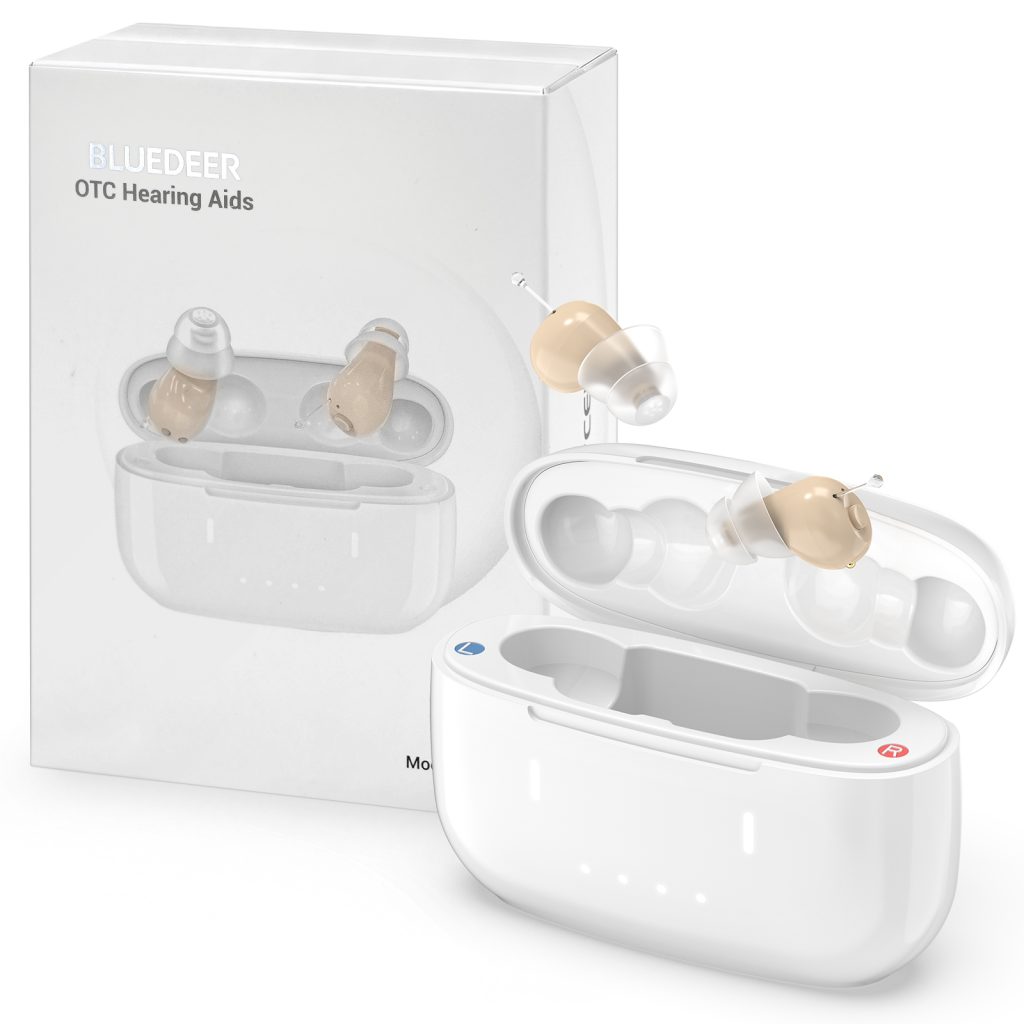
BlueDeer hearing aids help restore the clarity, confidence, and connection that make family moments meaningful.
You don’t need to “survive” gatherings anymore.
You can enjoy them again.
Because multiple conversations and background noise overload the brain’s ability to separate speech from noise.
Yes. Listening fatigue is common when the brain works too hard to decode unclear sound.
Modern devices like BlueDeer use directional microphones and noise reduction to improve speech clarity in noisy environments.
If you hear well at home but struggle in restaurants or gatherings, it’s a strong early sign of hearing loss.
Because the emotional stress and mental effort become draining, leading to social withdrawal.
Why does bone conduction work for some people and not others? Usually it comes down to fit, expectations, and setting — here is a 3-step check.
Why must bone conduction sit against your ear? Because it sends sound through bone, not air — and a gap breaks the signal. Here’s the simple test.
Hearing aids whistling? Here’s what causes hearing aid feedback — from a loose fit to earwax buildup — and practical fixes that may quiet it down.
Learn how to clean and maintain your hearing aids with this complete guide — a 5-minute daily routine, a weekly deep clean, and care tips for bone conduction and rechargeable models.