
You can hear someone talking, but you keep missing the words. You turn up the TV, ask people to repeat themselves, or move closer — and you still have trouble following the conversation.
If this sounds familiar, the problem may not be that you cannot hear sound at all. The harder problem can be understanding speech when the voice is mixed with distance or background noise.
Why Can I Hear But Not Understand What People Are Saying?
You may still detect sound but have difficulty separating speech from other sounds. Background noise, distance, several people talking at once, and changes in hearing sensitivity can all make words harder to understand.
This is why a quiet conversation at home can feel much easier than the same conversation in a restaurant.
It is also why simply increasing volume does not always fix the problem. More volume can make both the speaker and the background noise louder.
Why Is It Hard To Understand Speech In A Noisy Room?
A busy room gives your hearing system more work to do.
Imagine sitting across from a friend in a restaurant. Their voice has to travel across the table while other people are talking nearby. Dishes are moving. Music may be playing. Your attention has to pick out one voice from all of those sounds.
For someone with hearing difficulty, that separation can become much harder.
You may hear: “…dinner… Saturday… family…”
But miss: the words that tell you what was actually said.
Why Do I Hear The TV But Still Miss Conversations?
Television is different from a face-to-face conversation. The speaker may be several feet away, voices may be mixed with music or sound effects, and the volume may change from one scene to another.
If you find yourself turning the TV volume higher while still asking someone beside you to repeat what they said, it may be worth looking at the type of hearing support you are using rather than simply increasing volume.
Can A Remote Microphone Help With Conversations?
A remote microphone can be placed closer to the person speaking. This allows the microphone to pick up the speaker’s voice closer to its source before it travels through the surrounding environment.
This can be useful when talking with someone across a table, across a room, or in another situation where getting physically closer is not practical.

What Is A Bone Conduction Hearing Aid?
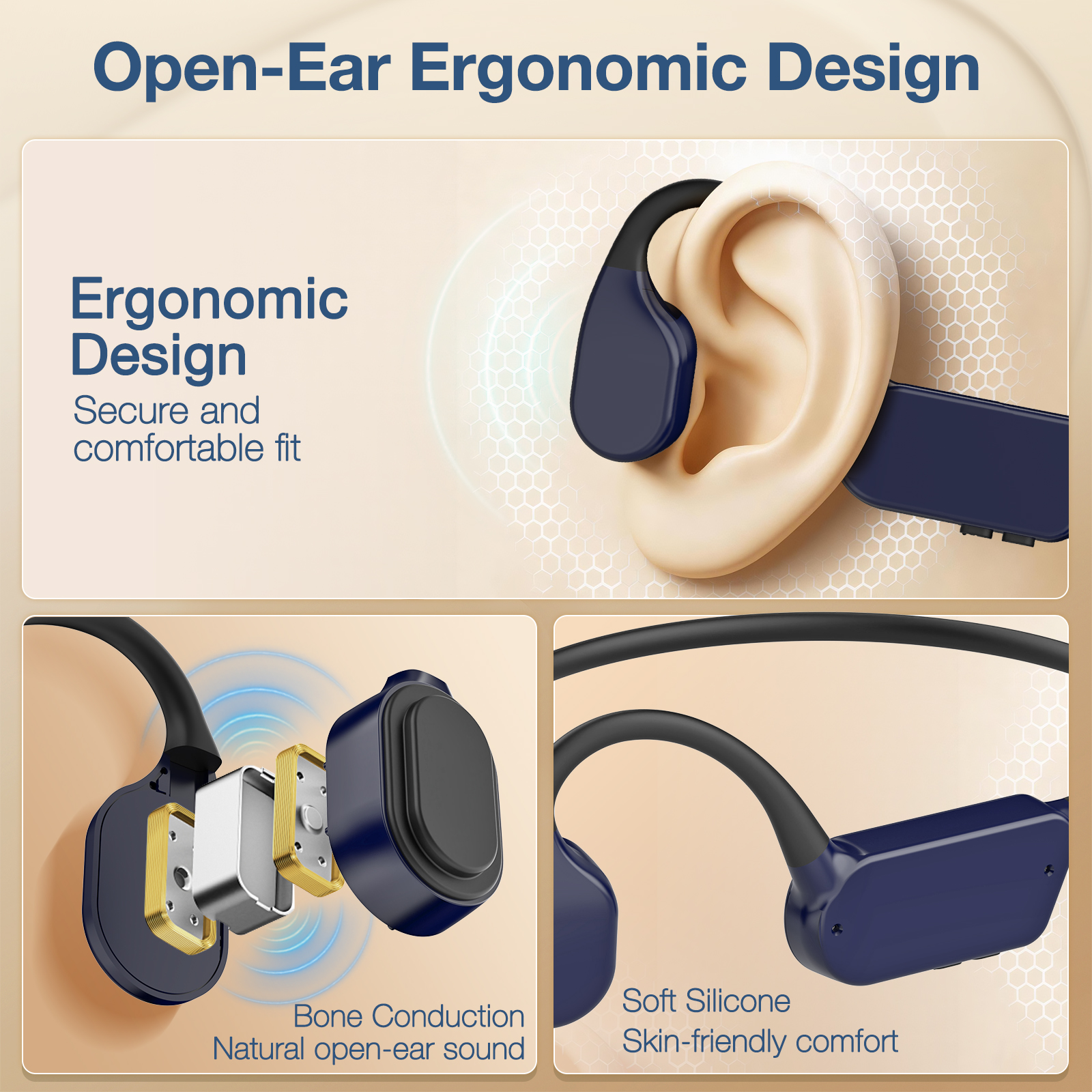
A bone conduction hearing aid uses vibrations transmitted through the bones near the ear as an alternative pathway for delivering sound.
Many bone conduction devices use an open-ear design. This means the ear canal does not have to be filled with an in-ear device.
For people who dislike the plugged or blocked feeling of conventional in-ear hearing devices, an open-ear design may be worth considering.
Which Hearing Aid Is Better For Conversations?
There is no single hearing aid that is best for everyone. The right choice depends on what makes conversations difficult for you.
If distance is a major problem, a hearing aid with remote microphone support may make more sense.
If you are more interested in smart controls, Bluetooth connectivity, and app-based adjustments, a smart bone conduction hearing aid may be a better match.
Need Help With Conversations From A Distance?
The BlueDeer Advanced Bone Conduction Hearing Aid With Remote Microphone combines bone conduction technology with a remote microphone designed for situations where speaker distance can make conversations harder to follow.
Want A Smart Bone Conduction Hearing Aid Instead?
If your priority is a more technology-focused hearing experience, the BlueDeer F2H PRO Smart Bone Conduction Hearing Aid is another option.
F2H PRO is designed around an open-ear bone conduction approach with smart controls, Bluetooth connectivity, and app support.

Which Option Makes More Sense For Your Situation?
- You mainly struggle when someone is farther away: consider the BlueDeer Advanced Bone Conduction Hearing Aid with Remote Microphone.
- You want smart controls and Bluetooth features: consider the BlueDeer F2H PRO Smart Bone Conduction Hearing Aid.
- You are unsure what is causing your difficulty: consider speaking with a hearing professional before choosing a device.
Questions People Ask About Missing Conversations
Why can I hear people but not understand their words?
Speech understanding can become difficult when background noise, distance, or multiple voices make it harder to separate one speaker from the surrounding sounds.
Why is it easier to hear in a quiet room?
A quiet room has fewer competing sounds. This gives you less background noise to separate from the person’s voice.
Can a remote microphone help me hear someone across the room?
A remote microphone is designed to capture the speaker’s voice closer to the source and can provide additional support when distance affects conversation.
Are bone conduction hearing aids good for conversations?
Bone conduction hearing aids provide an alternative way of delivering sound. Whether one is appropriate depends on your hearing needs, the type of hearing loss you have, and the listening situations you find difficult.
Should I get my hearing tested?
Yes. If you regularly have difficulty understanding speech, especially when other people can hear normally, a hearing evaluation can help identify the type and degree of hearing difficulty and guide your choice of hearing technology.
Start With The Problem You Are Actually Having
If you can hear sounds but regularly miss conversations, start by identifying when the problem happens: distance, background noise, multiple speakers, or everyday listening in general.
That answer can help you choose a hearing solution that fits the way you actually listen.