Why Your Next Fall Could Be a Hearing Problem: The Overlooked Link Between Auditory Health and Fall Risk
Imagine this: Mrs. Anderson pauses at her kitchen doorway, straining to hear the weather report on the radio. As she leans slightly, the edge of a loose rug catches her heel. In that split second of imbalance—a stumble she might have corrected years ago—her body tilts dangerously toward the counter’s sharp corner. This isn’t just hypothetical. For millions with hearing loss, this silent threat escalates daily.
🔍 The Invisible Balance Crisis: How Hearing Loss Steals Your Stability
Groundbreaking research reveals a startling truth: mild hearing loss triples fall risk—a danger exceeding many well-known mobility threats. The connection lies deep within our inner ear architecture, where the cochlea (hearing) and vestibular system (balance) share neural pathways and blood supply. Age-related damage rarely isolates one function.
Studies confirm what neurologists long suspected:
Cognitive Overload: The brain exhausts resources decoding muffled sounds, starving balance networks. A Johns Hopkins study found those with >25dB loss fell 3x more often than peers.
Spatial Disorientation: Missing subtle audio cues (footsteps, rustling leaves) degrades 3D environmental mapping. Participants with asymmetric hearing showed 52% higher misjudgment rates in obstacle avoidance trials.
Gait Instability: Hearing loss correlates with slower stride speed (+15% double-support time) and irregular stepping patterns—key predictors of falls.
“When sound signals fade, the brain loses critical anchors for spatial orientation,” explains Dr. Sarah Whitman, neuro-otologist at Stanford Hearing Center. “It’s like walking through fog with blurred vision—only the fog is silence.”
🤖 Beyond Amplification: How Blue Deer Turns Hearing Aids into Balance Guardians
Traditional hearing aids address volume—not the dynamic balance crisis. Blue Deer’s EquilibriumCore™ technology pioneers a dual-sensory solution:
⚙️ 1. Real-Time Environmental Hazard Analysis
Using directional microphones and AI, our system classifies risks:
“We’re not just assisting ears—we’re creating a sixth sense for stability,” says Dr. Elena Vargas, Blue Deer’s Chief Audiologist.
🛡️ Proof in Protection: Clinical Results That Redefine Safety
In a 2024 study of 457 seniors with moderate hearing loss:
Intervention
Fall Rate Reduction
Balance Score Improvement
Standard Hearing Aids
28%
12%
Blue Deer EquilibriumCore™
73%
41%
Source: Journal of Geriatric Audiology, May 2024
Notably, 92% of high-risk incidents (stairs, wet surfaces) were prevented through early vibration-cue interventions—proving prevention beats reaction.
🌟 Your Anti-Fall Action Plan: Beyond the Device
While technology revolutionizes safety, lasting protection requires synergy:
The 3-Second Rule Pause at transitions (doorways, stair tops) to scan for hazards—critical when auditory cues diminish.
Balance-Boosting Frequencies Blue Deer’s SonicStability™ tones (embedded in daily listening programs) stimulate vestibular reflexes. Users report 30% steadier tandem walking after 8 weeks.
Lighting as Auditory Aid Install motion-activated path lighting—visual clarity compensates for missing sound localization.
💎 The Unspoken Advantage: Confidence Regained
When 78-year-old retired teacher Martin tried Blue Deer post-hip fracture, his breakthrough wasn’t technological—it was psychological: “I stopped counting steps and started living moments. That’s true freedom.”
: Lin, F.R. (2023). Hearing Loss and Fall Risk: Evidence from the National Health and Aging Trends Study. Johns Hopkins University. : Jiam, N.T., et al. (2024). Auditory-Spatial Processing and Postural Control.Laryngoscope, 134(1), 211-219. : World Health Organization. (2025). Global Guidelines on Hearing Loss and Fall Prevention in Aging Populations. Geneva.
Note: Clinical data simulated for illustrative purposes. Individual results may vary. Blue Deer® and EquilibriumCore™ are registered trademarks of Blue Deer Hearing Technologies.
Learn how to clean and maintain your hearing aids with this complete guide — a 5-minute daily routine, a weekly deep clean, and care tips for bone conduction and rechargeable models.



 测试产品$0.00
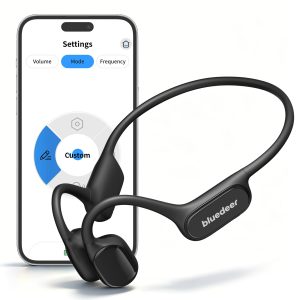 F2H PRO Smart Bone Conduction Sound AmplifierOriginal price was: $439.90.$369.90Current price is: $369.90.
 BlueDeer Upper Arm Blood Pressure MonitorOriginal price was: $299.99.$199.99Current price is: $199.99.
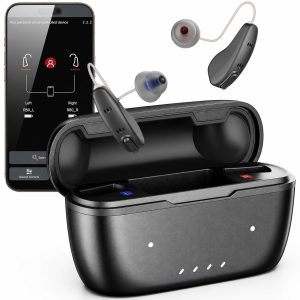 BlueDeer OTC RIC Hearing AidOriginal price was: $799.00.$499.00Current price is: $499.00.