
Why Do Some People Say It Works and Others Say It Doesn’t?
Why does bone conduction work for some people and not others? Usually it comes down to fit, expectations, and setting — here is a 3-step check.

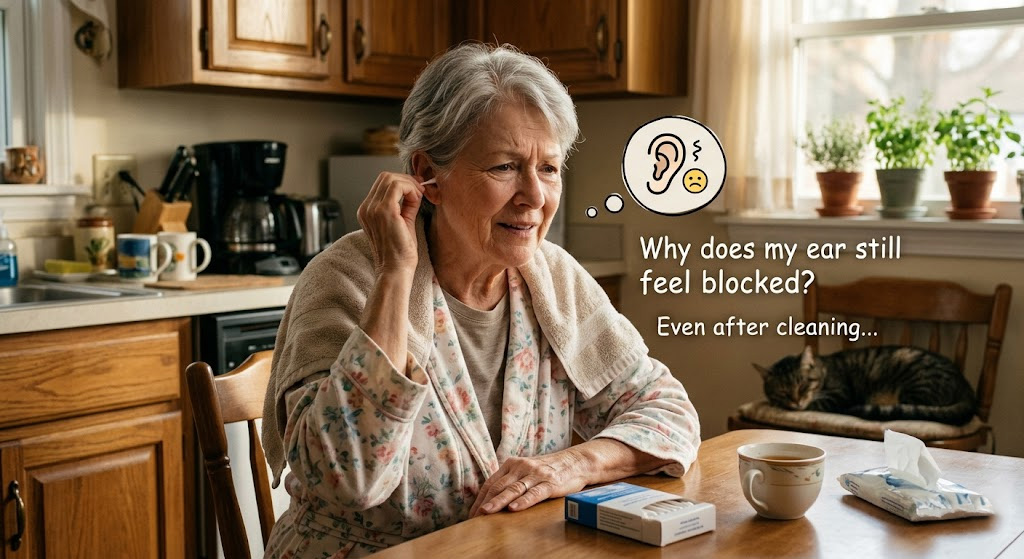
Many people try to clean their ears regularly.
It often feels like the right thing to do—especially when your ears feel a little blocked, itchy, or uncomfortable.
But a common situation confuses a lot of adults:
Even after cleaning your ears, the blocked feeling doesn’t really go away.
Sometimes it even comes back within hours or days.
If this sounds familiar, you’re not alone.
And in many cases, the issue is not what people assume.
Earwax is often blamed first.
So the natural reaction is to clean more often.
But earwax actually plays a role in protecting the ear canal and maintaining balance inside the ear.
For most adults, the ear already has a natural way of moving wax outward on its own.
That means frequent deep cleaning usually doesn’t “fix” anything long-term.
It only changes how the ear feels temporarily.
Right after using cotton swabs, many people describe the same feeling:
But this effect is usually short-lived.
Soon after, some people notice:
This creates a frustrating cycle:
clean → feel better → symptoms return → clean again
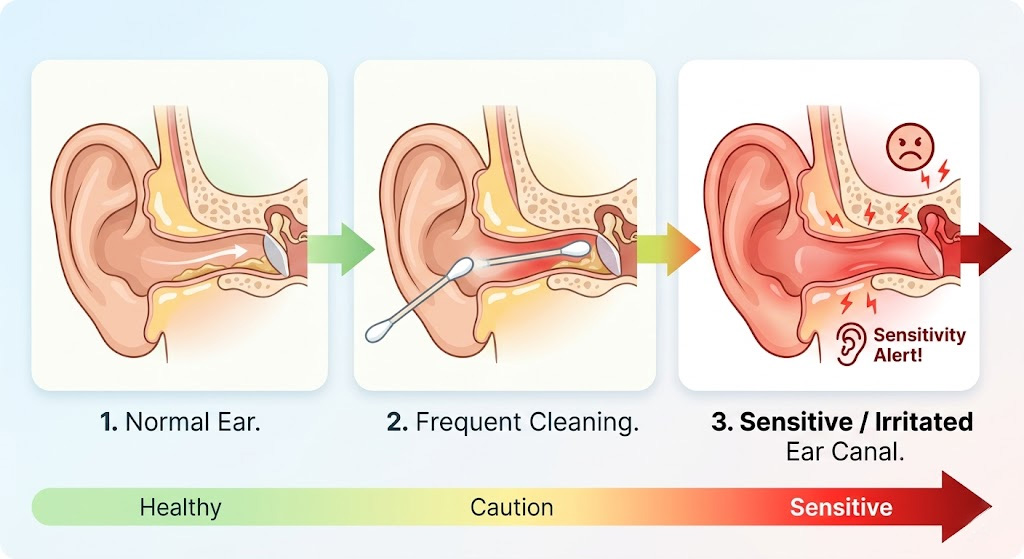
Over time, the ear can start feeling more sensitive than before.
The ear canal is delicate.
It’s not designed for frequent contact inside the canal.
When cleaning becomes a habit, especially with cotton swabs, some people gradually notice changes such as:
These changes usually don’t happen overnight.
They build slowly, which is why they are often overlooked.
This is the part many people miss.
When adults say:
“My ears feel blocked”
they often mean things like:
Because earwax is an easy explanation, many assume cleaning will solve it.
But when cleaning doesn’t make a lasting difference, it’s worth considering another possibility:
The issue may not be wax—it may be hearing clarity changing over time.
This is very common, especially after age 50, and often develops slowly.
Hearing changes don’t usually happen suddenly.
They tend to develop gradually, so the brain adapts without you noticing at first.
That’s why many people initially think:
But over time, some patterns become clearer:
At that point, cleaning the ears no longer helps much.
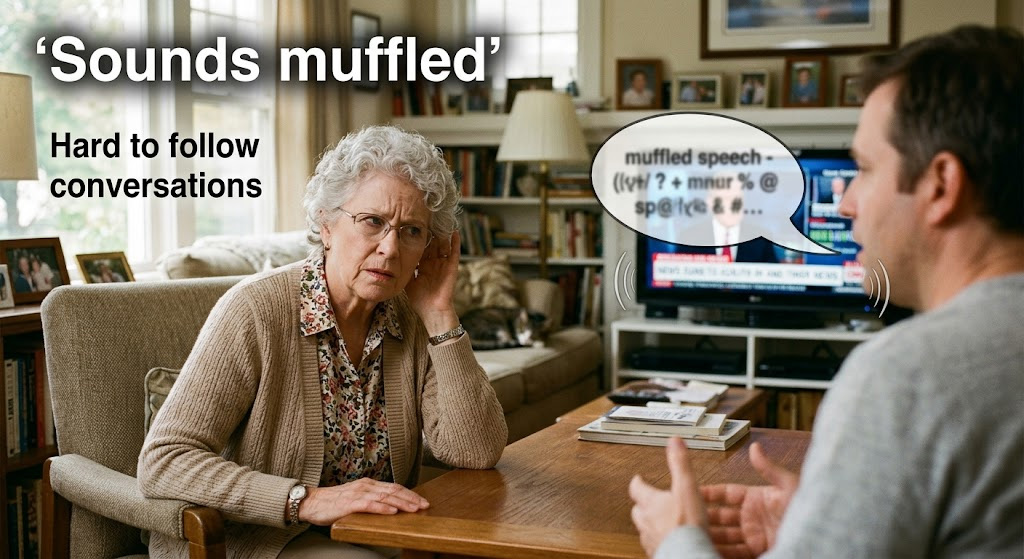
One of the earliest signs people describe is not “hearing loss,” but effort.
Listening starts to take more concentration.
For example:
Many people don’t connect this with hearing changes at first.
They just feel “tired of listening.”
When ears already feel sensitive or blocked easily, in-ear devices can sometimes feel uncomfortable.
Not because the devices are wrong—but because the ear itself feels more reactive.
This is why some adults begin exploring open-ear designs.
Open-ear hearing solutions do not sit inside the ear canal.
Instead, they leave the ear open, which may feel:
For people who are already sensitive to anything inside the ear, this difference can matter in daily life.

The Bluedeer F2H Bone Conduction Hearing Aid uses an open-ear design that avoids placing anything inside the ear canal.
It is often considered by people who:

If your ears still feel blocked even after cleaning, it may be worth paying attention to the pattern.
Because in many cases, the issue is not how clean your ears are.
It’s how clearly you are hearing.
And recognizing that early can make everyday communication much easier and less frustrating.
Why does bone conduction work for some people and not others? Usually it comes down to fit, expectations, and setting — here is a 3-step check.
Why must bone conduction sit against your ear? Because it sends sound through bone, not air — and a gap breaks the signal. Here’s the simple test.
Hearing aids whistling? Here’s what causes hearing aid feedback — from a loose fit to earwax buildup — and practical fixes that may quiet it down.
Learn how to clean and maintain your hearing aids with this complete guide — a 5-minute daily routine, a weekly deep clean, and care tips for bone conduction and rechargeable models.