
Why Do Some People Say It Works and Others Say It Doesn’t?
Why does bone conduction work for some people and not others? Usually it comes down to fit, expectations, and setting — here is a 3-step check.


For a long time, I thought my mom was simply changing.
She stopped joining conversations as much.
She preferred quieter restaurants.
During family dinners, she smiled and listened more than she talked.
I assumed it was normal.
People get older.
Their routines change.
They become more comfortable staying home.
Then one day, I noticed something.
She wasn’t choosing silence.
She was working harder to follow what everyone was saying.
Many adult children notice behaviors before they understand the reason.
For example:
Your parent:
At first, these seem like personality changes.
But sometimes, something else is happening.

This is the confusing part.
They can hear:
“Someone is talking.”
They can hear:
“The TV is on.”
They can hear:
“People are laughing.”
But they may miss:
And those small missed moments add up.

It is often a simple moment.
A grandchild tells a funny story.
Everyone laughs.
Your parent laughs too.
Later they ask:
“What happened?”
That is usually when families realize:
They were present.
But they were not fully included.

Many parents do not complain because they don’t want to become a burden.
They think:
“Everyone else is having fun.”
“I don’t want them to repeat everything for me.”
“It’s probably just my age.”
So they adapt.
They listen less.
They participate less.
The conversation often starts with:
“You need a hearing aid.”
But parents may hear:
“You’re getting old.”
A better starting point:
“I miss hearing your stories.”
“I want you to enjoy family dinners.”
“I want conversations to feel easier.”
The goal is connection.
Not correction.
One reason some people delay hearing devices is simple:
They do not want something uncomfortable.
| Traditional | Open Ear |
|---|---|
| Ear canal covered | Ear remains open |
| Feels noticeable | More natural feeling |
| May feel isolated | Keeps environmental awareness |
They worry about:
This is why comfort and everyday usability matter.
Open-ear hearing approaches, including bone conduction technology, are designed around a different idea:
Support hearing while keeping the experience natural.

Instead of blocking the ear canal:
Most families are not looking for a device.
They are looking for:
One more dinner conversation.
One more story from Dad.
One more laugh with grandchildren.
Better hearing is really about keeping those moments.
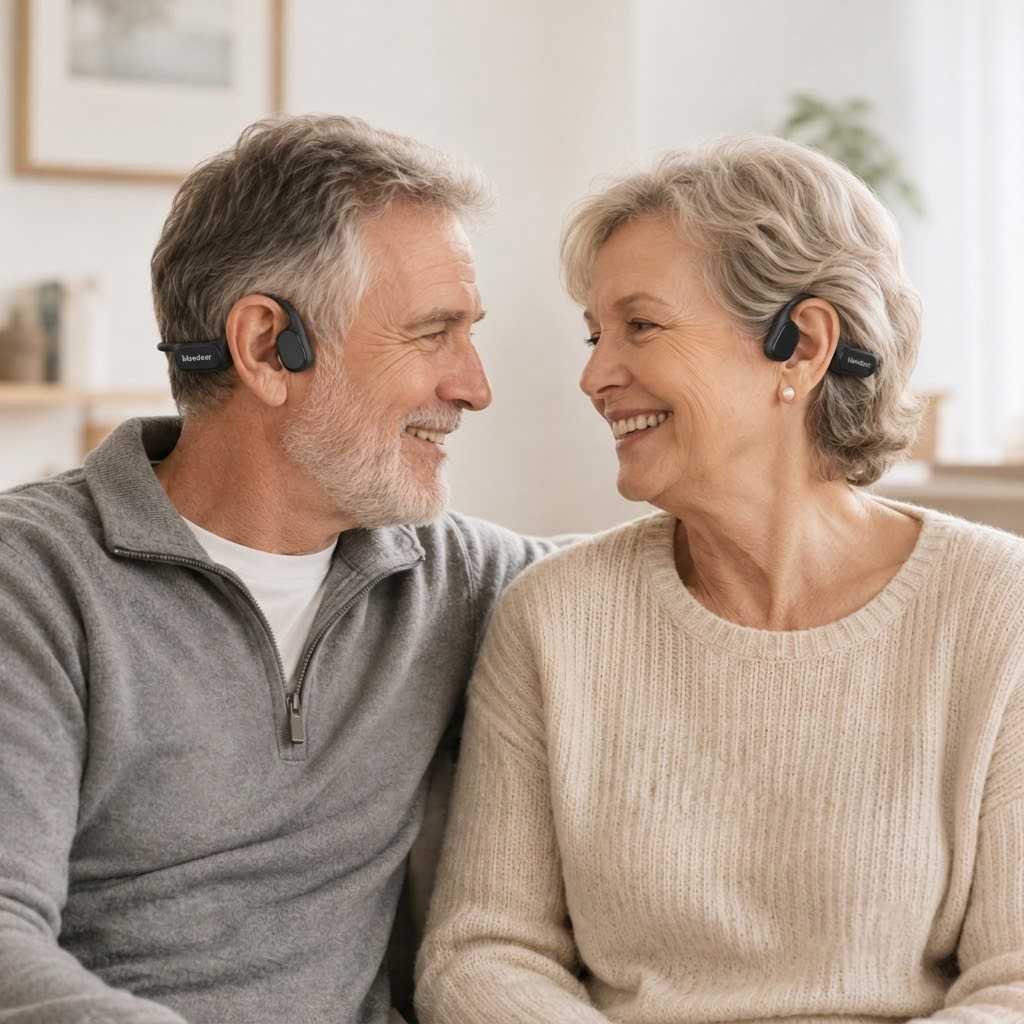
For families looking for a comfortable open-ear solution, the F2H Bone Conduction Hearing Aid is designed for everyday conversations.
Learn more:
Bluedeer F2H Bone Conduction Hearing Aid
Explore more options:
Sometimes people participate less when conversations become harder to follow.
Start with empathy and specific moments rather than telling them they have a problem.
Some avoid places where conversations require too much effort.
Why does bone conduction work for some people and not others? Usually it comes down to fit, expectations, and setting — here is a 3-step check.
Why must bone conduction sit against your ear? Because it sends sound through bone, not air — and a gap breaks the signal. Here’s the simple test.
Hearing aids whistling? Here’s what causes hearing aid feedback — from a loose fit to earwax buildup — and practical fixes that may quiet it down.
Learn how to clean and maintain your hearing aids with this complete guide — a 5-minute daily routine, a weekly deep clean, and care tips for bone conduction and rechargeable models.