
Why Do Some People Say It Works and Others Say It Doesn’t?
Why does bone conduction work for some people and not others? Usually it comes down to fit, expectations, and setting — here is a 3-step check.

Many people who are interested in bone conduction hearing devices have the same question:
When people hear the words “bone conduction,” they often think about implanted hearing devices and medical procedures.
However, modern technology has made it possible to experience bone conduction hearing aids without surgery through comfortable wearable devices designed for everyday use.
Unlike implanted bone conduction systems, these non-surgical devices do not require an operation or permanent implant.
The answer depends on the type of bone conduction device.
There are two main categories:
For many seniors and their families, a wearable option provides a simpler way to explore bone conduction technology without undergoing a surgical procedure.
A non-surgical bone conduction hearing aid works differently from a traditional hearing aid.
Instead of sending sound through the ear canal, it uses gentle vibrations near the cheekbone area to deliver sound directly to the inner ear.
Because the ear canal remains open, many users appreciate the comfortable and natural listening experience.

Traditional hearing aids usually work by delivering amplified sound through the ear canal.
Bone conduction devices take a different approach by keeping the ear open while using vibration technology to support hearing.
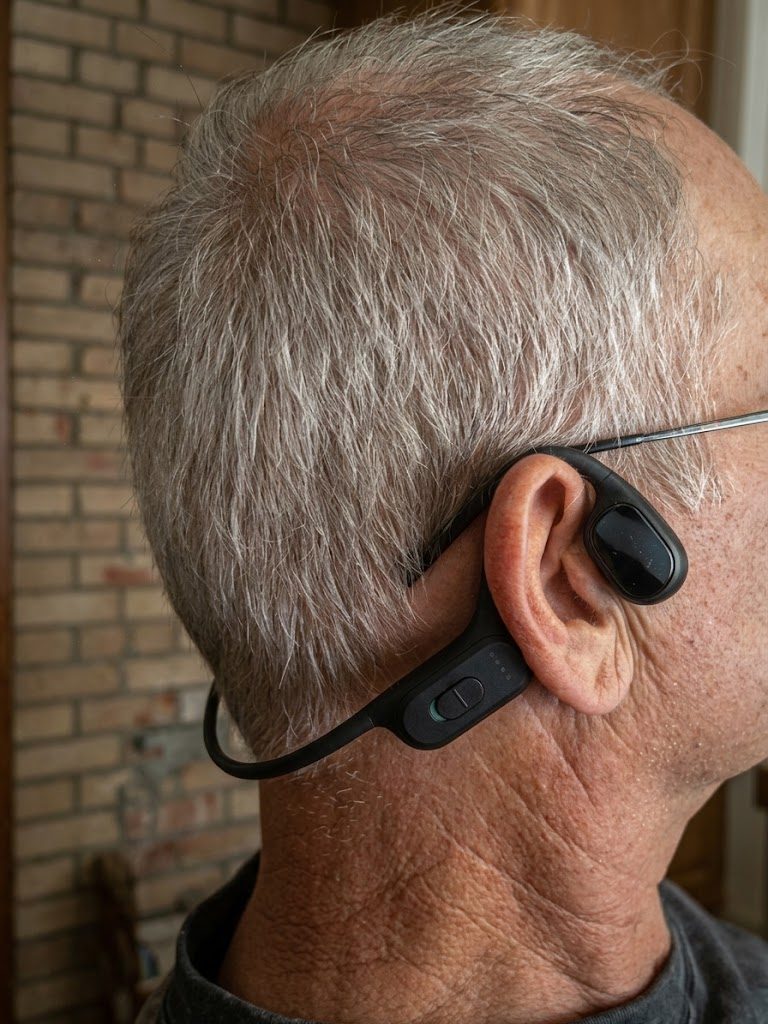

For many older adults, choosing a hearing device is not only about technology.
Comfort, simplicity, and confidence are equally important.
Some seniors avoid traditional hearing aids because they may not like:
A wearable bone conduction hearing device provides another option for people who want hearing support while keeping their ears open and comfortable.
Many seniors search for an open ear hearing device because they prefer a hearing solution that does not block the ear canal.
Keeping the ear open may help users stay aware of their surroundings while enjoying conversations and daily activities.
If you are comparing open ear devices with traditional hearing aids, this guide may help:
Open Ear Hearing Devices vs Hearing Aids for Seniors: What Should You Choose?

For seniors who want to explore bone conduction technology without surgery, BlueDeer F2H offers a comfortable wearable hearing solution designed for everyday life.
The goal is simple:
An open-ear bone conduction hearing device designed for seniors who want a comfortable, surgery-free hearing option.
Learn More About BlueDeer F2H| Traditional Hearing Aids | Non-Surgical Bone Conduction Hearing Devices | |
|---|---|---|
| Placement | Inside or around the ear | Near the cheekbone area |
| Surgery Required | No surgery required | No implant or surgical procedure required |
| Wearing Style | Ear-based design | Open-ear design |
| Common Preference | Users comfortable with traditional hearing aids | Users who prefer an open and comfortable wearing experience |
A wearable bone conduction hearing device may be worth considering if you:
There is no single hearing device that works perfectly for everyone.
The right choice depends on your hearing needs, comfort preferences, and daily lifestyle.
For many seniors and their families, the most important question is not:
Instead, the better question may be:
No. Some bone conduction hearing aids are wearable devices designed to work without surgery, implants, or medical procedures.
They may be a suitable option for seniors who prefer an open-ear design or want an alternative to traditional hearing devices.
A non-surgical bone conduction hearing aid is a wearable device that uses bone conduction technology without requiring an implanted component.
Yes. Wearable bone conduction hearing aids can provide a surgery-free way to experience this technology while keeping the ear open.
Many users prefer open ear hearing devices because they avoid the feeling of blocked ears and are designed for comfortable daily wear.
Why does bone conduction work for some people and not others? Usually it comes down to fit, expectations, and setting — here is a 3-step check.
Why must bone conduction sit against your ear? Because it sends sound through bone, not air — and a gap breaks the signal. Here’s the simple test.
Hearing aids whistling? Here’s what causes hearing aid feedback — from a loose fit to earwax buildup — and practical fixes that may quiet it down.
Learn how to clean and maintain your hearing aids with this complete guide — a 5-minute daily routine, a weekly deep clean, and care tips for bone conduction and rechargeable models.