
For many people, glasses are part of everyday life. They help you read, drive, watch television, and stay connected with the world around you.
So when hearing becomes more difficult, many glasses wearers ask the same question: Can I wear bone conduction hearing aids with glasses comfortably?
This is a common concern among seniors and adults who have worn glasses for years. The idea of adding another device near the ears can feel inconvenient at first.
The good news is that many people who wear glasses can also use bone conduction hearing aids comfortably. Understanding how these devices work and how to position them correctly can make a big difference.
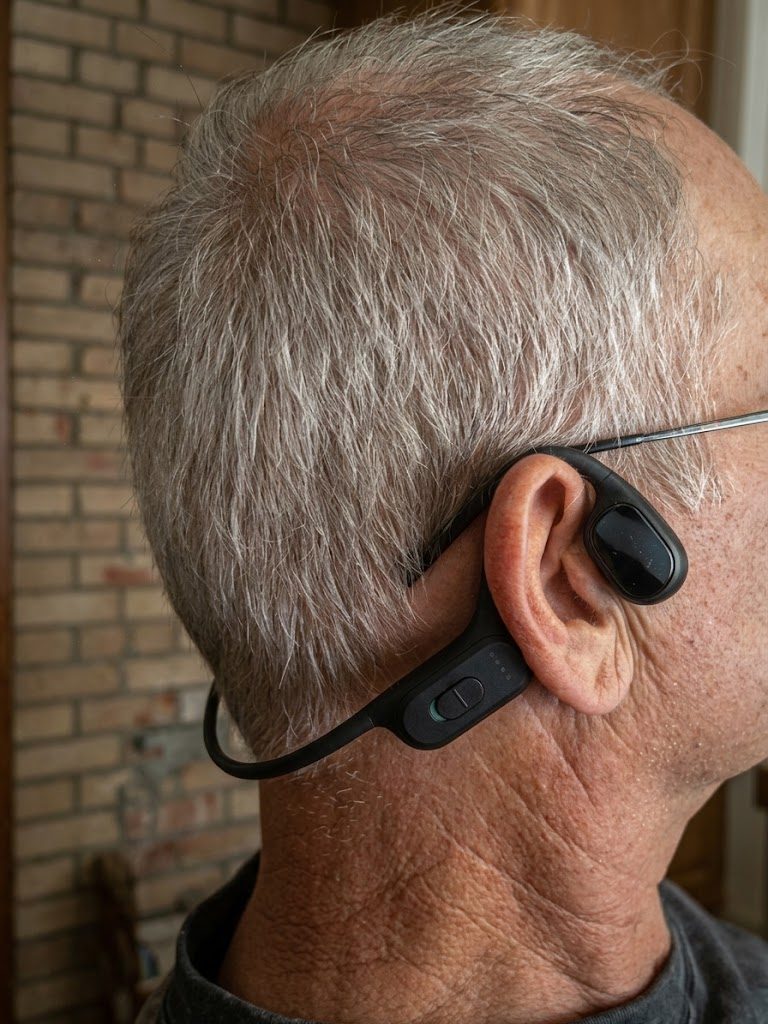
Why Glasses Wearers Often Worry About Hearing Aids
If you already wear glasses every day, comfort is probably one of your biggest concerns when choosing a hearing device.
Many people hesitate because they wonder:
- Will the hearing device press against my glasses?
- Will my ears feel crowded?
- Will I need to adjust both devices throughout the day?
- Will it feel uncomfortable after several hours?
These are reasonable questions. A hearing device is something you may wear from morning until evening, so comfort is just as important as hearing performance.
How Bone Conduction Hearing Aids Work Differently
Traditional hearing aids usually deliver amplified sound through the ear canal. Depending on the design, they may sit inside the ear or behind the ear.
Bone conduction hearing aids use a different approach. Instead of placing a speaker inside the ear canal, they use vibrations through the bone area near the ear to help transmit sound to the inner ear.
Because of this open-ear design, many users appreciate that they can:
- Keep their ear canals open
- Stay aware of surrounding sounds
- Avoid the plugged feeling some people experience with in-ear devices
- Wear their hearing support more naturally throughout the day
Do Glasses Interfere With Bone Conduction Hearing Aids?
In most situations, glasses and bone conduction hearing aids can be worn together.
However, comfort depends on several factors, including your glasses frame, head shape, and how the hearing device is positioned.
Your Glasses Frame Matters
Some glasses frames have thicker temples or tighter arms that may create extra pressure around the same area where a hearing device rests.
Many users find lightweight frames with comfortable temples easier to combine with hearing devices.
Correct Position Makes a Difference
A bone conduction hearing aid should sit securely near the cheekbone area without creating unnecessary pressure.
If something feels uncomfortable, a small adjustment in positioning can often improve the experience.
How To Wear Glasses and Bone Conduction Hearing Aids Comfortably
1. Put Your Glasses On First
Start with your glasses in their normal position. Make sure they feel comfortable before adding your hearing device.
2. Position the Hearing Device Correctly
Place the bone conduction hearing aid according to the fitting instructions. It should feel stable while allowing you to move naturally.
3. Test During Your Normal Daily Activities
The best fit is not only about the first few minutes. Try wearing both devices while doing things you normally enjoy:
- Talking with family members
- Watching television
- Walking outdoors
- Making phone calls
- Attending social gatherings
Are Open Ear Hearing Aids a Good Choice for Glasses Wearers?
There is no single hearing solution that works for everyone. Different people have different hearing needs, comfort preferences, and lifestyles.
However, some glasses wearers prefer open-ear hearing aids because they do not require anything to sit inside the ear canal.
This type of design may be appealing for people who:
- Dislike the feeling of blocked ears
- Wear glasses every day
- Prefer lightweight hearing support
- Want to stay aware of their surroundings
A hearing device should fit into your daily routine, not make your routine more complicated.
Why Comfort Matters When Choosing Hearing Support
Many people focus on sound quality when choosing hearing aids. But long-term use often depends on another important factor: comfort.
A device that feels natural to wear is more likely to become part of your everyday life.
For many users, better hearing means being able to:
- Follow conversations more easily
- Enjoy time with family
- Participate in social activities
- Feel more connected with others
BlueDeer F2H Open-Ear Bone Conduction Hearing Aid
BlueDeer F2H uses open-ear bone conduction technology designed for people who want hearing support without blocking their ears.
The lightweight design is created for everyday situations, including wearing glasses, spending time outdoors, making phone calls, and communicating with family.
For people who have avoided hearing devices because they felt uncomfortable or difficult to use, an open-ear approach provides another option to explore.
Explore BlueDeer F2H Bone Conduction Hearing Aid →
Frequently Asked Questions
Can I wear glasses and bone conduction hearing aids at the same time?
Yes. Many people wear glasses and bone conduction hearing aids together comfortably. The most important factors are proper positioning and finding a comfortable fit.
Will glasses interfere with bone conduction hearing aids?
Most glasses do not interfere with bone conduction hearing aids. Comfort may depend on the thickness of your glasses frame and how the device sits near your cheekbone.
Are bone conduction hearing aids comfortable for seniors who wear glasses?
Many seniors prefer open-ear designs because they keep the ear canal open and can feel more natural for everyday wearing.
Can I wear sunglasses with bone conduction hearing aids?
Yes. Many users can wear sunglasses and bone conduction hearing aids together by adjusting the position for comfort.
What should glasses wearers look for when choosing hearing aids?
Important factors include comfort, weight, battery life, ease of use, and whether the hearing device fits naturally into your everyday lifestyle.
