
Struggling to follow conversations in a busy restaurant or family gathering? The right hearing aid accessory can help — but the best choice depends on what you are actually having trouble hearing.
If you mainly struggle to hear one person sitting across from you or nearby, a remote microphone is one of the most relevant hearing aid accessories to consider.
A remote microphone can be placed closer to the person speaking and send their voice to a compatible hearing device. It does not make the restaurant silent. Instead, it helps give the voice you want to hear a better position relative to the surrounding noise.
Why Can You Hear at Home but Struggle at a Restaurant?
This is a frustrating experience for many people who use hearing aids or other hearing devices.
At home, you may sit across from your spouse at the kitchen table and have a perfectly normal conversation.
Then you meet the same person for dinner.
Suddenly, you are asking them to repeat themselves.
The difference is not necessarily your hearing device. The listening environment has changed.
A restaurant can contain several competing sounds at the same time:
- Conversations at nearby tables
- Plates, glasses and silverware
- Background music
- Kitchen and bar noise
- People walking past
- Echo and reflections from the room
There is also the distance between you and the person speaking.
If your partner is sitting several feet away, their voice has to travel through all of that before reaching the microphones on your hearing device.
That is why simply turning up the volume does not always solve the problem.
“I Can Hear People Talking. I Just Can’t Understand What They’re Saying.”
This is an important distinction.
Many people do not describe their problem as “I can’t hear.” They say something more like:
You may hear your daughter speaking but miss a few words. You may understand the beginning of a sentence and lose the rest. You may hear your partner when they are facing you but struggle when they turn their head.
In a noisy restaurant, those small gaps add up.
You start guessing the words you missed from the context. Sometimes you get it right. Sometimes you don’t.
After doing that for an entire dinner, listening can become tiring.
And that is why the most useful hearing aid accessory is not necessarily the one with the longest list of features.
It is the one that addresses the situation that causes you the most trouble.
Which Hearing Aid Accessories Actually Make Sense?
There is no single best hearing aid accessory for everyone.
Start with the situation rather than the product.
| What you are trying to hear | Accessory to consider |
|---|---|
| One person across the table | Remote microphone |
| One person speaking in the car | Remote microphone |
| One-to-one conversation in a busy place | Remote microphone |
| Several people talking around a table | Compatible table microphone |
| Television at home | TV streamer |
| Easier volume or setting control | Remote control |
The important thing is that you do not necessarily need another hearing device. You may simply need the right accessory for the situation where listening becomes difficult.
1. Remote Microphones: When You Want to Hear One Person More Clearly
Imagine sitting across from your spouse in a busy restaurant.
You can see their face. You know they are talking to you. But there are conversations happening all around you.
A remote microphone takes a simple approach to that problem.
Instead of relying only on the microphones built into your hearing device to pick up a voice from several feet away, the remote microphone can be positioned closer to the person speaking.
The microphone is simply closer to the voice you are interested in.
That can make a remote microphone particularly relevant for:
- Restaurant conversations
- Family dinners
- Talking with your spouse
- Conversations in the car
- One-to-one conversations
- Talking with someone across a room
- Busy social environments
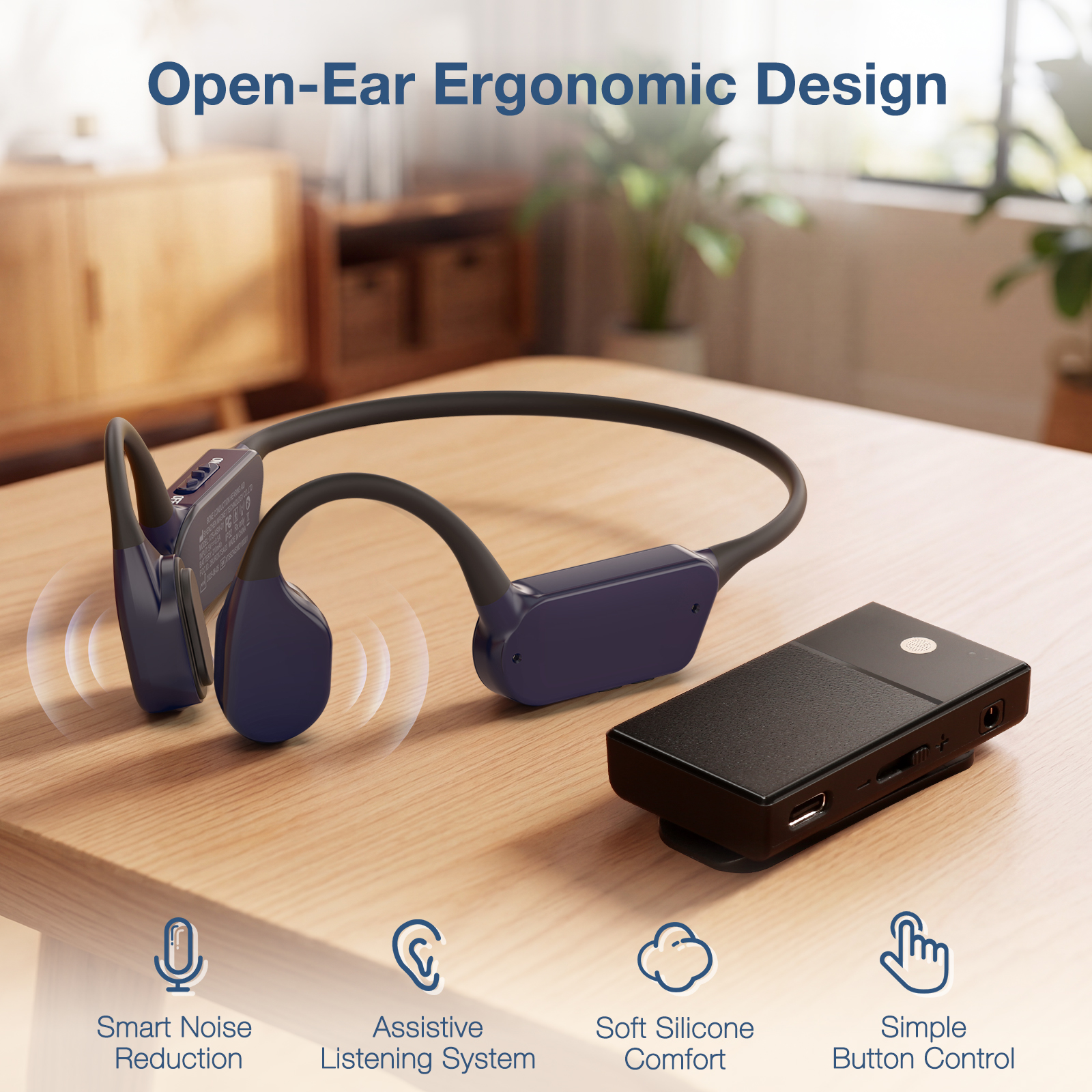
The idea is straightforward: bring the microphone closer to the conversation.
It is important to keep expectations realistic. A remote microphone does not make every restaurant quiet or remove every sound around you. Its purpose is to give the voice you want to hear a better position relative to the surrounding noise.
When Does a Remote Microphone Make the Most Sense?
A remote microphone is especially worth considering when distance is part of the problem.
At a Restaurant
Your partner is sitting across the table, while conversations from nearby tables compete for your attention.
In the Car
Road noise, the ventilation system and the position of the speaker can make conversation more difficult.
At Home
Your spouse may be talking from another part of the room, particularly while you are cooking, reading or moving around the house.
During a One-to-One Conversation
If you are sitting farther away from someone in a busy environment, placing the microphone closer to them can be a practical option.
2. Table Microphones: When Several People Are Talking
A remote microphone works especially well when there is one person you want to hear.
Family dinners can be different.
Imagine six people sitting around a table.
Your daughter says something. Your son joins the conversation. Someone across the table laughs. Two people start talking at once.
In that situation, a table microphone may be worth considering if your hearing system supports one.
Table microphones are designed for group conversations and can sit in the middle of a table rather than being worn by one person.
Compatibility is important, though. Not every table microphone works with every hearing device.
3. TV Streamers: For a Different Kind of Listening Problem
If your biggest complaint is television, a remote microphone may not be the accessory you need.
A TV streamer is designed to send TV audio directly to compatible hearing devices.
That is a different problem from trying to hear your spouse across a noisy restaurant.
A TV streamer addresses television listening. A remote microphone addresses conversation.
4. Remote Controls: Convenient, but Not a Solution for Noise
A remote control can make some hearing devices easier to operate. You may be able to adjust volume or settings without reaching for your phone.
That can be convenient.
But if your real problem is:
A remote control does not change the distance between you and the speaker.
In that situation, a remote microphone is more directly related to the problem.
What About Family Gatherings?
Family gatherings can be where the frustration becomes most obvious.
It is not necessarily about missing every word.
It can be missing the joke everyone else laughed at. Missing what your grandchild said. Asking someone to repeat a story you have already asked them to repeat.
Or eventually becoming quieter because keeping up with the conversation takes too much effort.
That is why the goal should not be:
The more useful goal is:
Try These Simple Changes Before Buying an Accessory
Technology is not always the first thing to try.
Where you sit and how people speak to you can also make conversations easier.
- Choose a quieter table. Avoid the kitchen, bar, loudspeakers and high-traffic areas when possible.
- Sit with your back toward a wall. This can reduce some of the sound coming from behind you.
- Keep the speaker’s face visible. Seeing someone’s face can provide useful visual information during conversation.
- Ask people to face you. “Could you face me when you talk? It helps me hear you.” is a simple request.
- Move if the environment becomes too loud. Asking for a quieter table is perfectly reasonable.
Do You Need a Remote Microphone If You Already Have Hearing Aids?
Not necessarily.
If you hear comfortably in most situations, you may never need one.
But think about the situations that repeatedly cause frustration.
- You hear well in quiet places but struggle in restaurants.
- You understand someone better when they are close to you.
- You have trouble following your partner in the car.
- You miss parts of conversations when people sit across the table.
- You frequently ask family members to repeat themselves.
- You avoid noisy restaurants because conversation becomes tiring.
If several of these sound familiar, a remote microphone may be worth considering.
It is not necessarily about replacing your hearing device. It is about having another tool for situations where everyday listening becomes more difficult.
Is a Remote Microphone Better Than Turning Up the Volume?
Not necessarily better in every situation. It is simply a different approach.
Turning up the volume increases the level of sound reaching you. But when the room contains a lot of competing noise, making everything louder does not automatically make one voice easier to follow.
A remote microphone approaches the problem at the source.
It is positioned closer to the person speaking.
It is “How can I make the person I’m talking to easier to follow?”
What Should You Look for in a Remote Microphone?
1. Compatibility
This should always come first. Make sure the remote microphone is compatible with your hearing device before purchasing.
2. Simple Pairing
If using the microphone feels complicated, you are less likely to carry it and use it regularly.
3. Practical Microphone Placement
For one-to-one conversations, the microphone should be positioned reasonably close to the person speaking.
4. Comfortable Everyday Design
If you plan to use it at dinner, in the car or while walking, it should feel like a practical part of your routine rather than another bulky device to manage.
5. A Real Reason to Carry It
Do not buy an accessory simply because it has impressive specifications.
Think of three real situations where you would use it.
If those situations are restaurant dinners, family gatherings and conversations in the car, a remote microphone may make more sense than an accessory designed primarily for television.
BlueDeer Remote Microphone
If you use a compatible BlueDeer hearing device, the BlueDeer Remote Microphone is designed for situations where getting the microphone closer to the person speaking can make sense.
It can be useful for restaurant conversations, family dinners, conversations in the car and other one-to-one situations where distance or background noise makes listening more difficult.
The idea is simple: put the microphone closer to the conversation.
Explore Remote MicrophoneA Simple Way to Use It at Your Next Dinner
You do not need to change your entire routine.
Before leaving home, make sure your hearing device and remote microphone are charged and connected.
When you arrive, choose a seat where you can see the people you want to talk with.
If you are mainly talking with one person, place the remote microphone near them.
Then stop thinking about the technology and enjoy your dinner.
Frequently Asked Questions
If you mainly struggle to hear one person across a table, a remote microphone is one of the most relevant accessories to consider. For larger group conversations, a compatible table microphone may be more appropriate.
A remote microphone can be useful when distance and background noise make it difficult to follow one person. It places the microphone closer to the speaker and sends the captured audio to a compatible hearing device.
Not necessarily. A remote microphone is an accessory for specific listening situations. It may be worth considering if you hear well in quiet places but consistently struggle with conversations in restaurants, cars or other noisy environments.
A hearing aid is designed for everyday hearing support. A remote microphone is an accessory that can help in specific situations by placing the microphone closer to the person speaking.
A compatible remote microphone can be useful for conversations in a car when road, engine or ventilation noise makes speech more difficult to follow.
No. Compatibility varies between hearing devices and remote microphones. Always check the manufacturer’s compatibility information before purchasing.
It depends on the type of conversation. A remote microphone can be useful for one-to-one conversations, while a compatible table microphone may be more suitable when several people are talking around the table.
The Best Hearing Aid Accessory Is the One That Solves Your Problem
There is no single accessory that is right for everyone.
If you mainly struggle to hear one person in a noisy restaurant, a remote microphone is worth considering.
If you regularly have large group conversations around a table, look into a compatible table microphone.
If your biggest frustration is watching television, a TV streamer may be a better fit.
And sometimes, the best first step is simply moving to a quieter table.
The important thing is to identify what actually makes listening difficult for you, rather than buying an accessory simply because someone calls it the “best.”
It is about hearing the people who matter.
The laugh at the other end of the table. The story you’ve already asked your partner to repeat once. Your grandchild saying something you don’t want to miss.
Those are the moments worth making easier.
Make Conversations Easier to Follow
See if the BlueDeer Remote Microphone is the right fit for the conversations that matter most to you.
Explore BlueDeer Remote Microphone